“But how do they even know if my child is actually learning?” It’s the question almost every parent asks before enrolling in an online school — usually right after they’ve decided the curriculum and flexibility make sense, and right before they commit. Fair question. Exams without a physical classroom, invigilators, or a principal’s office can feel like a black box from the outside.
It isn’t one. Here’s exactly how online school exams, assessments, and progress tracking actually work.
Quick Answer
Online school exams typically combine live proctored assessments, regular assignments, and weekly progress evaluations, all tracked through a learning management system (LMS) that both students and parents can access. Most online CBSE schools follow the same internal and external assessment structure as physical schools, with added digital tools for real-time progress visibility.
Key Takeaways
- Online exams are usually proctored live via video, not left unsupervised
- Progress tracking happens continuously, not just at term-end report cards
- Parents typically get direct LMS access to see grades, attendance, and teacher feedback
- CBSE’s internal and external assessment structure applies the same way online as offline
- Weekly or bi-weekly evaluations are common, giving parents an early signal if something needs attention
How Exams Work in an Online School
The core concern parents have is simple: without someone physically watching, what stops a child from getting help during a test?
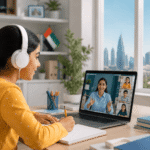
Reputable online schools solve this with live video proctoring — students take exams during a scheduled live session, camera on, with a teacher or proctor present in the same way an invigilator would walk a physical classroom. Timed sections, single-question-at-a-time formats, and randomized question order are common additional safeguards.
For CBSE-affiliated online schools specifically, the exam structure mirrors what’s used in physical CBSE schools: periodic tests, half-yearly exams, and annual exams, following the same syllabus and evaluation weightage set by the board.
Types of Assessments Used
Assessment in a well-run online school isn’t a single test at the end of the term — it’s layered throughout, which actually gives parents more visibility than a traditional single-exam model.
- Formative assessments — quizzes, class participation, and short in-class checks during live lessons
- Assignments and homework — submitted digitally through the LMS, reviewed and graded with feedback
- Periodic tests — shorter unit-based tests through the term
- Half-yearly and annual exams — larger, cumulative assessments following CBSE’s standard structure
- Project-based evaluation — increasingly used to assess applied understanding, not just recall
This layered approach means a single bad day on one test rarely defines a child’s overall academic picture — something that’s often harder to see clearly in a traditional single-exam system.
How Progress Tracking Actually Works
This is where online school genuinely outperforms many physical school setups, simply because the infrastructure is built to be digital from day one.
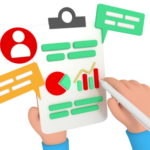
Real-time LMS access. Parents typically get a login to a dashboard showing attendance, assignment completion, grades, and sometimes even time spent on specific topics.
Weekly evaluation cycles. Rather than waiting for a term-end report card, many online schools run weekly or bi-weekly progress checks, flagging early if a student is falling behind in a specific subject.
Teacher feedback loops. Because online classes are typically smaller, teachers can leave more specific, individualized comments on assignments rather than generic marks.
Parent-teacher collaboration built into the calendar. Rather than a single annual parent-teacher meeting, structured check-ins happen more frequently, often digitally, making it easier to address a concern before it becomes a pattern.
What a Typical Progress Report Includes
If you’re used to a physical school’s term-end report card, an online school’s version usually contains the same core information, presented with more granularity:
- Subject-wise grades and remarks
- Attendance and live-class participation record
- Assignment completion rate
- Teacher comments on strengths and areas for improvement
- Comparison against class or grade-level benchmarks (in some schools)
The main difference isn’t what’s measured — it’s how often you see it. Instead of one document twice a year, most online schools give you an evolving picture you can check whenever you want.
Common Concerns Parents Have — Addressed Directly
“What if my child cheats during an online exam?” Live video proctoring, timed formats, and randomized questions substantially reduce this risk — comparable to the safeguards in a supervised physical exam room.
“Will I actually know if my child is struggling, or will it go unnoticed?” This is precisely what weekly evaluation cycles are designed to prevent. A pattern of dropping performance is typically visible within one or two evaluation cycles, not an entire term.
“Is the exam difficulty the same as a physical CBSE school?” For CBSE-affiliated online schools, yes — the syllabus, exam pattern, and difficulty follow the same board guidelines, regardless of delivery format.
“How do I stay involved without hovering over every assignment?” Most schools’ LMS dashboards are built precisely so you don’t need to ask your child daily “how did the test go” — you can check attendance, grades, and feedback directly, and reserve conversations for anything that actually needs discussion.
Why This Structure Tends to Work Well for GCC Expat Families
For parents managing careers, time zones, and often more than one child’s schooling, the ability to check progress on your own schedule — rather than waiting for a scheduled meeting — genuinely reduces the mental load of staying on top of academics from a distance. It also means if a family needs to travel or relocate again, there’s a clear digital record of the child’s progress that transfers with them, rather than starting from a blank slate with a new school.
Frequently Asked Questions
Are online school exams recognized the same as physical school exams for CBSE?
Yes, provided the school is CBSE-affiliated. The board doesn’t distinguish between online and offline delivery for exam recognition — only affiliation status matters.
How often will I receive updates on my child’s progress?
This varies by school, but weekly or bi-weekly evaluation cycles are increasingly standard, in addition to term-end report cards.
Can I request a meeting with a teacher outside scheduled parent-teacher sessions?
Most online schools allow parents to request additional check-ins, especially if a concern comes up between scheduled meetings.
What happens if my child misses a live proctored exam due to a time zone or connectivity issue?
Reputable schools have a make-up exam policy for genuine technical or scheduling conflicts — it’s worth confirming this policy specifically during admission.
Does the school track soft skills, or only academic grades?
Many online schools now include participation, collaboration, and communication as part of holistic progress tracking, not just subject-wise grades.
The absence of a physical classroom doesn’t mean an absence of accountability — if anything, a well-run online school gives you more visibility into your child’s academic life than most physical schools ever did. You just have to know where to look, and now you do.