Over the past decade, India’s educational ecosystem has undergone a visible transformation. What once revolved around physical classrooms, rigid schedules, and geographic limitations has gradually shifted toward flexible, technology-enabled systems. Online School Education in India is no longer perceived as a temporary alternative—it is becoming a structured and credible mode of mainstream education.
Parents today are not merely looking for schools; they are looking for learning systems that provide academic consistency, personal attention, skill development, and safety. The digital transformation of schooling is addressing these expectations in ways traditional models often struggle to match.
The Changing Landscape of Education in India
India’s shift toward digital schooling is driven by multiple structural and societal changes:
- Increasing mobility of families across cities and countries
- Greater awareness of personalized learning approaches
- Rising infrastructure and tuition costs in metropolitan schools
- Integration of digital tools encouraged under NEP 2020
- Demand for skill-based and future-ready education
This transition reflects a broader understanding: education must adapt to the learner not the other way around.
Online schooling is not about eliminating discipline. It is about restructuring delivery without compromising academic depth.

What Defines Quality Online School Education?
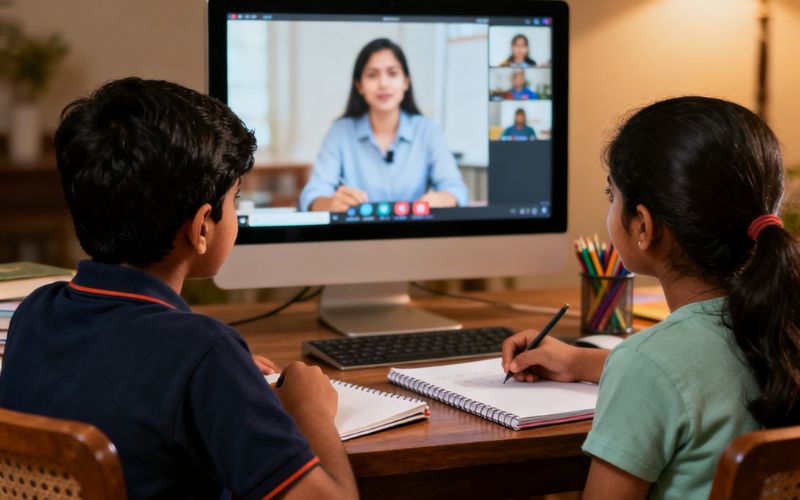
Not every digital classroom qualifies as structured schooling. High-quality online school education in India includes carefully designed systems that replicate and enhance traditional academic rigor.
1. Structured Academic Calendar
A professional online school follows a defined academic schedule aligned with curriculum standards. Classes are conducted at fixed times, assessments are planned systematically, and academic progression is monitored.
2. Live Interactive Teaching
Unlike passive video-based learning platforms, structured online schooling involves live teacher-led sessions where students can ask questions, participate in discussions, and receive immediate clarification.
3. Continuous Evaluation
Weekly quizzes, subject-based tests, assignments, and performance tracking ensure that learning gaps are identified early. Academic data allows teachers to adjust support strategies.
4. Transparent Parent Communication
Parents receive structured updates through progress reports and virtual parent-teacher meetings. This creates a collaborative learning environment at home.
Addressing Common Concerns About Online Schooling
Many parents initially worry about screen time, discipline, and peer interaction. However, structured online education models address these concerns effectively.
Balanced Digital Exposure
A well-designed online academic program includes offline assignments, reading tasks, practical activities, and structured study breaks to prevent excessive screen fatigue.
Discipline & Accountability
Attendance tracking, performance monitoring, and teacher supervision maintain academic accountability comparable to traditional classrooms.
Peer Interaction
Virtual breakout sessions, collaborative projects, and structured group discussions allow students to build communication skills and social confidence.
Online schooling is not isolation—it is a digitally connected classroom environment.
Who Benefits Most from Online Schooling?
The flexibility of digital learning particularly benefits:
- Students relocating frequently
- Learners preparing for competitive exams
- Children involved in sports, arts, or performance training
- Students requiring individualized academic pacing
- Families seeking safer home-based learning models
In each case, flexibility is paired with structured curriculum delivery.
Skill Development in the Digital Era
Modern education extends beyond academic textbooks. Effective online school education in India integrates:
- Critical thinking development
- Communication skills
- Digital literacy
- Independent learning habits
- Time management skills
Students gradually become self-directed learners—an essential trait in higher education and professional life.
The Long-Term Impact of Online Learning
Research and emerging data suggest that students exposed to structured digital learning environments develop stronger:
- Self-discipline
- Adaptability
- Technological confidence
- Independent problem-solving abilities
These competencies align with the demands of the modern workforce.
The objective is not merely to pass examinations but to prepare learners for dynamic global opportunities.
Choosing the Right Online School
When evaluating options, parents should consider:
- Curriculum alignment (CBSE/NCERT-based or equivalent structure)
- Teacher qualifications
- Assessment transparency
- Student support systems
- Parent communication framework
A credible online school operates as a full academic institution not just a video platform.
How Edument Supports Online School Education in India
Edument Knowledge Hub provides structured live classes, defined academic calendars, performance monitoring, and consistent teacher engagement within its digital framework.
Students receive:
- Interactive virtual classrooms
- Recorded sessions for revision
- Continuous assessment
- Transparent reporting
- Guided academic support
By combining discipline with flexibility, Edument ensures learners receive academically sound and future-ready schooling within a secure digital environment.