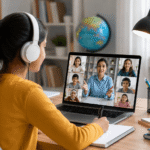
Many parents who choose online school or homeschooling in India assume one thing: when board exams come, their child can simply register privately with CBSE.
It is a reasonable guess. It is also, for most families, not how the rules work.
The CBSE private exam form for 2027 is open right now, so this is the perfect time to understand who can actually use it, and what to do if your child cannot.
Quick answer: CBSE private candidature is open only to specific groups, such as students who failed, got a compartment, were placed in Essential Repeat, or want to improve marks or add a subject after passing. A student who has never been registered with CBSE generally cannot sit board exams privately. For online and homeschooled students, the usual routes are a CBSE-affiliated school or NIOS.
Key takeaways
- The CBSE private exam form for 2027 opened on 8 October 2026.
- The normal deadline is 23 October 2026; with a late fee, it is 30 October 2026.
- Private candidature is mainly for students who have already appeared in CBSE board exams.
- Fresh homeschooled students are generally not eligible, apart from a few Delhi-specific cases.
- NIOS is a recognised national board that many online and homeschooled students use for Class 10 and 12.
What is a CBSE private candidate?
A CBSE private candidate is a student who sits the CBSE board exams without being enrolled as a regular student in a CBSE-affiliated school that year. They apply directly to CBSE, pay the exam fee, and write the exams at a centre CBSE allots.
The key point is that this route is designed mainly for students who have already been part of the CBSE system.
Who can apply as a CBSE private candidate in 2027?
For the 2027 exams, CBSE allows these groups to apply privately:
- Students placed in the Essential Repeat category in the 2026 results.
- Students with a compartment in 2026 who did not pass after their first attempt.
- Students declared Fail or Essential Repeat in any year from 2021 to 2026.
- Students who passed in 2026 and want to improve marks in one or more subjects.
- Students who passed in 2026 and want to take an additional subject.
- Some Delhi-only cases, such as female residents of Delhi and candidates with special needs who meet set conditions.
Notice what is missing from this list: a student who has never registered for CBSE board exams and has studied at home or online.
Can a homeschooled or online school student write CBSE boards privately?
In most cases, no. Unless your child falls into one of the categories above, CBSE does not offer a direct private route for a first-time Class 10 or 12 candidate.
This surprises many families. Picture Meera’s parents in Kochi. They homeschooled her through Class 8 using CBSE books, planning to register her privately for Class 10. In Class 9, they discovered she was not eligible and had to rethink everything in a hurry.
The good news is that there are clear routes. You just need to choose one early.
What are the other routes for online and homeschooled students?
NIOS certificates are recognised for higher studies in India, and the board was built for students learning outside a regular classroom. If flexibility matters most, it is worth a close look. You can learn how NIOS works for Class 10 and 12 on our guide to NIOS for Class 10 and 12 students page, or read Everything You Need to Know About NIOS Admission Process.
Key dates and fees for CBSE private candidates 2027
If your child is in one of the eligible groups, act quickly:
| Item | Detail |
|---|---|
| Form opened | 8 October 2026 |
| Last date without late fee | 23 October 2026 |
| Last date with late fee | 30 October 2026 |
| Exam fee (candidates in India) | ₹320 per subject |
| Exam fee (candidates abroad) | ₹2,200 per subject |
| Exams held | February to April 2027 |
Always confirm the final dates and fees on the official CBSE website before you pay.
The other routes, side by side
| Route | How it works | Best for |
|---|---|---|
| CBSE-affiliated school | Your child is registered as a regular student and sits boards through the school | Families who want the CBSE certificate |
| NIOS (National Institute of Open Schooling) | A national open-schooling board set up by the Government of India, with flexible subject choice and exam timing | Homeschooled, online and working students who need flexibility |
| Online school with a clear exam pathway | The school guides registration through an approved route | Families who want online learning and a clear board-exam plan |
How do you apply as a CBSE private candidate?
- Visit the official CBSE website and open the private candidate form link.
- Fill in your details and choose your subjects.
- Upload the required documents, such as your previous marksheet.
- Pay the exam fee online.
- Check every detail, then download and print the form.
Keep a copy of the form and payment receipt. You may need them later for your admit card.
How to choose the right route for your child
Ask yourself three simple questions:
- Does my child need the CBSE certificate specifically? If yes, plan for enrolment in a CBSE-affiliated school before Class 9.
- Does my child need flexible timing for health, travel, sport or work? If yes, NIOS may suit better.
- Do we want structured online teaching along the way? If yes, choose an online school that explains its board-exam pathway clearly before you enrol.
The worst choice is no choice. Families who decide by Class 8 have time to plan. Families who wait until Class 10 often feel rushed.
Frequently asked questions
Who can appear as a CBSE private candidate?
Mainly students who failed, got a compartment, were placed in Essential Repeat, or passed and want to improve marks or add a subject. A few extra categories apply only to Delhi residents.
Can a homeschooled student write CBSE board exams privately?
Generally not as a first-time candidate. Homeschooled students usually go through a CBSE-affiliated school or NIOS.
What is the last date for the CBSE private exam form 2027?
23 October 2026 without a late fee, and 30 October 2026 with a late fee.
What is the exam fee for private candidates living abroad?
₹2,200 per subject, compared with ₹320 per subject for candidates in India.
Is NIOS a good option for online school students?
For many families, yes. NIOS is a recognised national board designed for flexible learning, though the right choice depends on your child’s goals.
Plan the exam route before you need it
Online learning gives your child freedom in how they learn. A clear board-exam plan makes sure that freedom leads somewhere.
If you are exploring online schooling in India, talk to the school about exams on day one, not in Class 10. See how online schooling in India works at Edument.
Ask the right questions now, and your child will walk into their board year with a plan instead of a panic.