The education system in India is changing rapidly. Parents are no longer limited to traditional classrooms when choosing the best learning environment for their children. Today, online school education in India is becoming a practical and trusted alternative for families looking for flexibility, academic quality, and personalised learning.
With growing access to technology, virtual classrooms, structured online learning, and internationally aligned curricula, students now have more options than ever before. Whether families prefer an Indian curriculum, British pathway, homeschooling support, or live online classes, modern schools are redefining how children learn and grow.
But how exactly are modern online schools changing education in India? Let’s break it down.
How Are Online Schools Transforming Education in India?
Modern online schools in India are transforming education by offering:
- Flexible learning schedules
- Live and recorded classes
- Personalised learning experiences
- Multiple curriculum options (Indian, British, American)
- Better parent involvement
- Holistic development beyond academics
- Technology-driven learning environments
An Indian online school today focuses not only on grades but also on critical thinking, emotional intelligence, communication, and future-ready skills.
Why Online School Education in India Is Growing
The rise of virtual school education in India is not accidental. Parents are increasingly searching for learning systems that suit modern lifestyles, reduce academic pressure, and provide better flexibility.
Traditional schools often follow a fixed structure. While that works for many students, others may benefit from more personalised schedules and self-paced learning.
Modern online schools support:
- Students who travel frequently
- Families living abroad
- Homeschooled learners
- Children needing flexible schedules
- Students requiring additional academic support
- Learners pursuing extracurricular interests like sports, arts, or coding
Online schooling also gives parents greater visibility into academic progress and classroom engagement.
Synchronous vs Asynchronous Learning: What’s the Difference?
One major advantage of online school education in India is flexibility in learning methods.
Most modern online schools use a combination of synchronous and asynchronous learning.
1. Synchronous Learning (Live Learning)
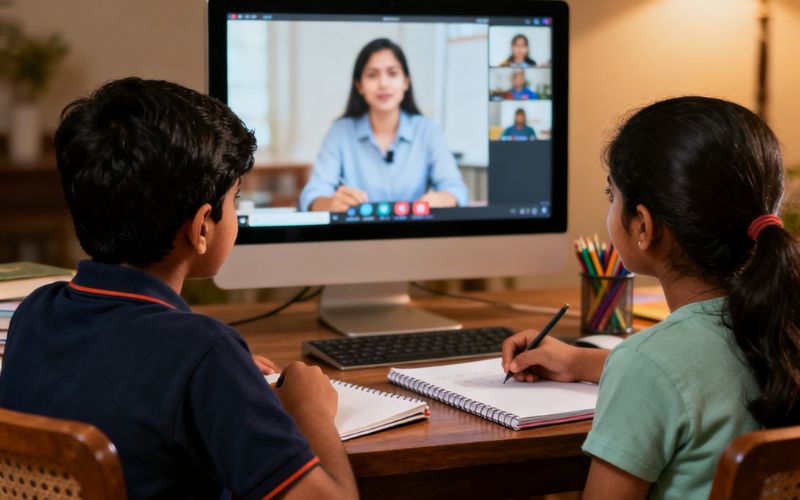
Synchronous learning happens in real time.
Students attend:
- Live virtual classes
- Teacher interactions
- Group discussions
- Classroom activities
- Live doubt-clearing sessions
This setup closely resembles a physical classroom experience while maintaining the flexibility of studying from home.
Benefits of synchronous learning:
- Real-time teacher guidance
- Better engagement
- Peer interaction
- Strong classroom routine
- Immediate doubt clarification
For younger students especially, live sessions help maintain discipline and learning consistency.
2. Asynchronous Learning (Self-Paced Learning)
Asynchronous learning allows students to study independently.
Students access:
- Recorded lectures
- Learning materials
- Assignments
- Practice modules
- Revision content
They can learn at their own pace without attending live sessions at a fixed time.
Benefits of asynchronous learning:
- Flexible schedules
- Self-paced learning
- Better revision opportunities
- Reduced academic stress
- Personalized progress tracking
Most successful virtual school education in India combines both methods to create balanced learning.
Curriculum Choices in Modern Online Schools
One reason many families are moving toward online education is curriculum flexibility.
Instead of a one-size-fits-all system, students can often choose pathways based on their academic goals.
Indian Curriculum
The Indian curriculum remains one of the most preferred learning paths for students in India.
It typically includes:
- CBSE-aligned learning
- NIOS pathways
- Structured academic foundations
- Competitive exam readiness
- Strong conceptual learning
This option works well for students planning to continue higher education in India.
British Curriculum
British curriculum schools focus heavily on conceptual understanding and independent thinking.
Students benefit from:
- Inquiry-based learning
- Global academic recognition
- International assessment systems
- Analytical thinking skills
Families planning overseas education often prefer this route.
American Curriculum
The American system is more flexible and skill-oriented.
Students experience:
- Continuous assessment models
- Practical project-based learning
- Elective subject flexibility
- Personalized academic pathways
This model supports broader academic exploration.
When selecting an Indian online school, parents should focus less on popularity and more on what aligns with their child’s learning style and future goals.
How Online Schools Support Social and Emotional Development
One common misconception about online schooling is that students miss social development.
In reality, strong online schools actively support emotional growth and collaboration.
Interactive Classrooms
Students participate in:
- Live discussions
- Team activities
- Group projects
- Student clubs
- Peer interactions
These experiences encourage communication, confidence, and teamwork.
Emotional Wellbeing Support
Modern schools increasingly include:
- Counseling support
- Teacher mentoring
- Emotional check-ins
- Parent-teacher collaboration
This helps students manage stress, confidence issues, and academic anxiety.
Extracurricular Learning
Many online schools now offer:
- Coding classes
- Art sessions
- STEM activities
- Public speaking
- Financial literacy programs
- Robotics and creative projects
The focus has shifted from pure academics to holistic child development.
Benefits of Virtual School Education in India
Here are some practical advantages parents often experience:
Personalized Learning
Students learn at their own pace instead of being pushed into a rigid structure.
Flexible Scheduling
Children can balance studies with sports, hobbies, travel, or health-related needs.
Learning from Anywhere
Students can access quality education regardless of city or location.
Better Parent Visibility
Parents can track progress, attendance, and performance more closely.
Technology-Driven Learning
Modern learning tools improve engagement through interactive lessons and digital resources.
For many families, online school education in India creates a better balance between academics and personal growth.
Is an Online School Right for Your Child?
There is no universal answer.
Online schools work particularly well for students who:
- Prefer personalised learning
- Need flexible schedules
- Travel frequently
- Experience school-related stress
- Require additional academic support
- Thrive in smaller or focused learning environments
However, parents should choose schools carefully by evaluating:
- Curriculum quality
- Teacher expertise
- Student support systems
- Technology infrastructure
- Academic flexibility
The right environment matters more than trends.
Final Thoughts
Modern education is no longer restricted to classrooms and fixed routines. The growth of online school education in India shows that families are increasingly prioritizing flexibility, personalised learning, and skill development alongside academics. Whether through live classes, self-paced modules, or global curriculum options, virtual school education in India continues to reshape how children learn and prepare for the future. For parents seeking structured online learning, curriculum flexibility, and a student-focused experience, platforms like Edument are helping learners explore more adaptable and future-ready ways of education.
FAQs
1. What is online school education in India?
Online school education in India allows students to learn through digital classrooms, live sessions, recorded lessons, and structured virtual learning platforms.
2. What is the difference between synchronous and asynchronous learning?
Synchronous learning happens live with teachers and classmates, while asynchronous learning allows students to study independently using recorded materials and assignments.
3. Are online schools good for child development?
Yes. Many online schools now include emotional learning, extracurricular activities, communication development, and collaborative projects for holistic growth.
4. Which curriculum is best in an Indian online school?
It depends on future goals. Indian curriculum works well for local higher education, while British and American systems offer global flexibility.
5. Can students socialize in online schools?
Yes. Modern online schools encourage peer interaction through group discussions, projects, clubs, live sessions, and collaborative activities.